Hope, extraordinary recovery stories, and the difficult choices people make when conventional treatment options are running out.
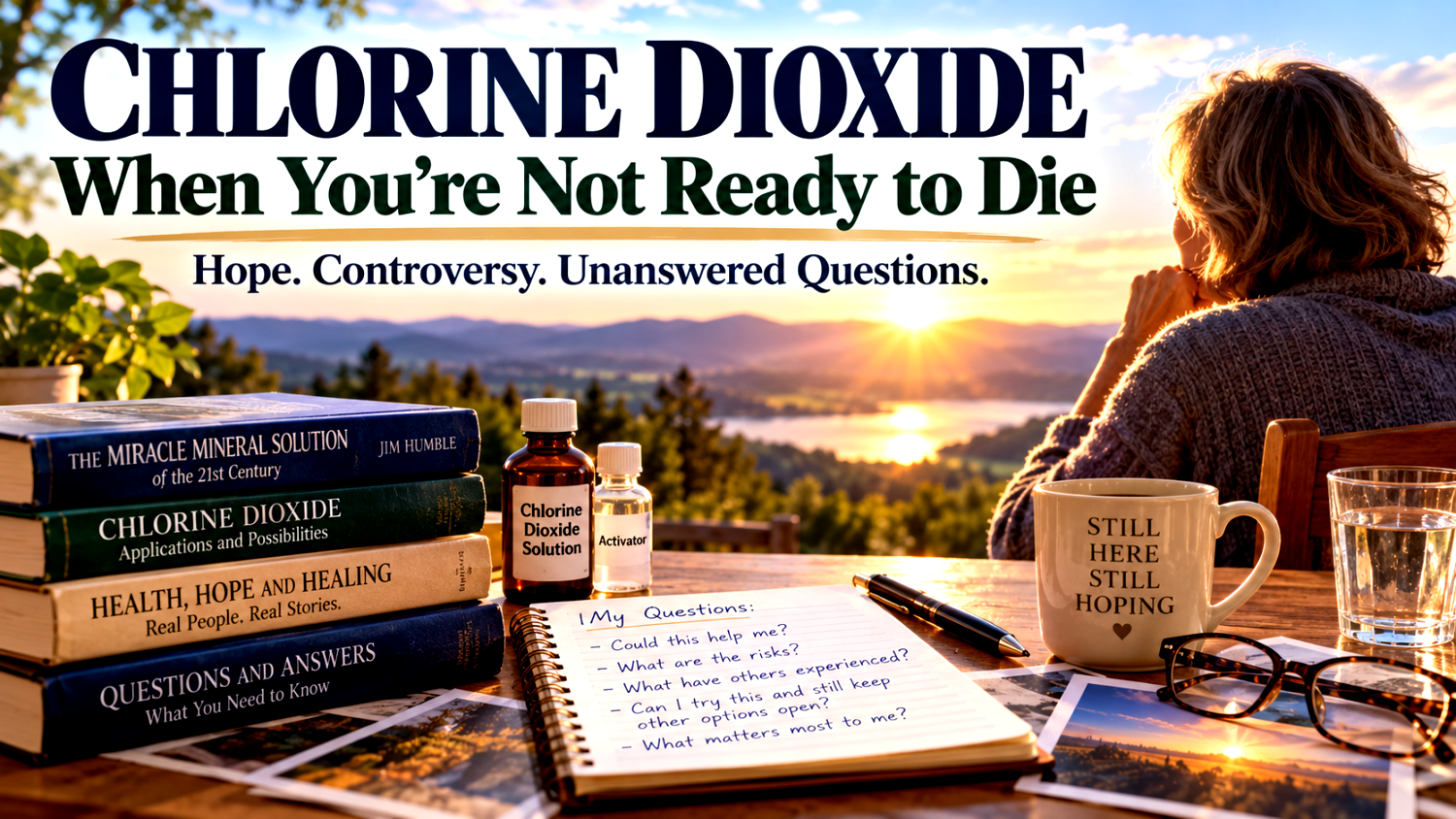
There comes a moment when the conversation about chlorine dioxide changes.
You’ve been discussing the research. Perhaps you’re explaining oxidation, water purification, microorganisms, clinical evidence, or the difficulty of determining which intervention produced a particular result.
And the person sitting across from you interrupts.
“Who cares what does what? I’m going to die. I don’t have time for all those questions. Just tell me everything I could do, and I’ll do whatever I can.”
That’s not a hypothetical conversation. It’s the kind of response that arises when someone has been told their illness is terminal, that conventional treatment options have been exhausted, or that the remaining time should be spent putting their affairs in order. And sometimes, the subject of that conversation is chlorine dioxide.
To an outside observer, the interest may seem difficult to understand. Why would someone facing a life-threatening illness become interested in a chemical best known for disinfecting water? Why would they read books describing unconventional uses, listen to personal testimonials, or investigate something that has attracted so much controversy?
Perhaps the answer begins with a question that has very little to do with chemistry.
What would you do if someone told you that you had six months to live—and you weren’t ready to go?
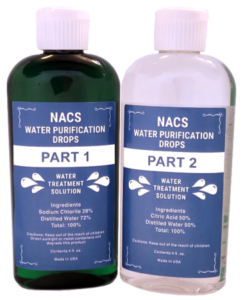
When Chlorine Dioxide Enters the Conversation
Most people don’t begin their lives expecting to investigate chlorine dioxide as a health intervention. They encounter it through circumstances.
- A friend mentions a recovery story.
- Someone recommends a book.
- An alternative-health practitioner discusses oxidative compounds.
- A family member sends an article.
- Or someone who has been told that further medical treatment is unlikely to help begins searching for possibilities that haven’t yet been explored.
Eventually, chlorine dioxide appears.
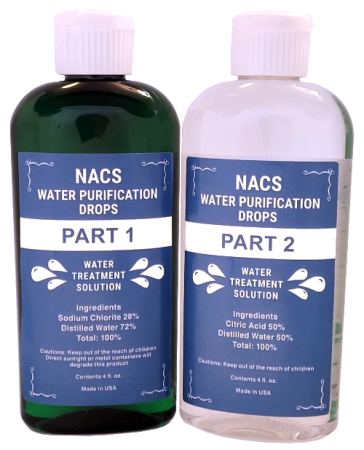
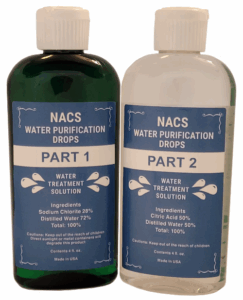
Perhaps they’ve already heard the criticism. Perhaps they know about the controversy surrounding Miracle Mineral Solution, commonly called MMS, or chlorine dioxide solution, sometimes called CDS.
They may have encountered warnings from the FDA, articles questioning its advocates, or accounts from people who believe it helped them. And now they want to know more.
For someone in good health, the natural response might be to compare claims, read scientific studies, and evaluate the evidence. For someone who believes they are running out of time, the response may be different. They may ask only:
“Has anyone ever gotten better after using it?”
That question deserves an answer that is both compassionate and accurate.
People have reported improvements while using chlorine dioxide. Such accounts are part of the history of the subject. But a reported improvement does not, by itself, establish that chlorine dioxide caused it.
Those two statements can coexist. And understanding the difference doesn’t require dismissing the person asking.
A Controversial History—and the People Behind the Stories
The modern alternative-health interest in chlorine dioxide is closely associated with Jim Humble, whose writings and public accounts brought the substance to an international audience of millions. His claims were ambitious, sometimes extraordinary, and frequently controversial.
Regulators and medical authorities challenged claims that chlorine dioxide could treat serious illnesses. The FDA issued warnings about the dangers of consuming chlorine dioxide products marketed for medical purposes.
Those warnings concerned safety risks, including serious adverse reactions, rather than merely disagreements over scientific terminology. Yet the public controversy was only one part of the story.
Another part involved people who encountered Humble’s writings during periods of fear, illness, or uncertainty.
Some reported improvements. Some became enthusiastic advocates. Some found renewed hope in the possibility that another approach existed. Others experienced no benefit, and adverse outcomes have also been reported.
It would be a mistake to assume that every extraordinary recovery story proves the claims made about chlorine dioxide. But it would also miss something important to overlook why those stories became so meaningful to people.
For many readers, the attraction wasn’t simply a chemical. It was the possibility that their story wasn’t finished.
“I’m Going to Do Everything It Says”
Imagine someone holding a book about chlorine dioxide. They find a chapter addressing the illness they’ve been diagnosed with. The chapter discusses chlorine dioxide alongside several other natural or alternative approaches. They read the recommendations and make a decision.
“I’m going to do everything it says, right here.”
A researcher might immediately begin asking questions.
- Which intervention has evidence of effectiveness?
- What are the risks of combining them?
- How will the person know whether any particular intervention is helping?
Those questions are reasonable.
But the person holding the book may not be interested in separating every variable. They may have already been told that conventional treatment has little more to offer. They may feel that they have spent enough time waiting, worrying, and asking permission.
And they may be thinking:
I’m not looking for a scientific career. I’m looking for another chance at life.
That urgency is real. So is the responsibility of anyone offering information to that person.
A book can offer possibilities, but it cannot establish that every recommendation is appropriate for every diagnosis. Some substances and combinations can cause significant harm. Chlorine dioxide ingestion, in particular, is not an established safe treatment for human disease.
The compassionate response is neither to ridicule the person’s determination nor to encourage indiscriminate experimentation. It is to recognize the urgency while helping them preserve the best opportunities available.
What We Know About Chlorine Dioxide—and What We Don’t
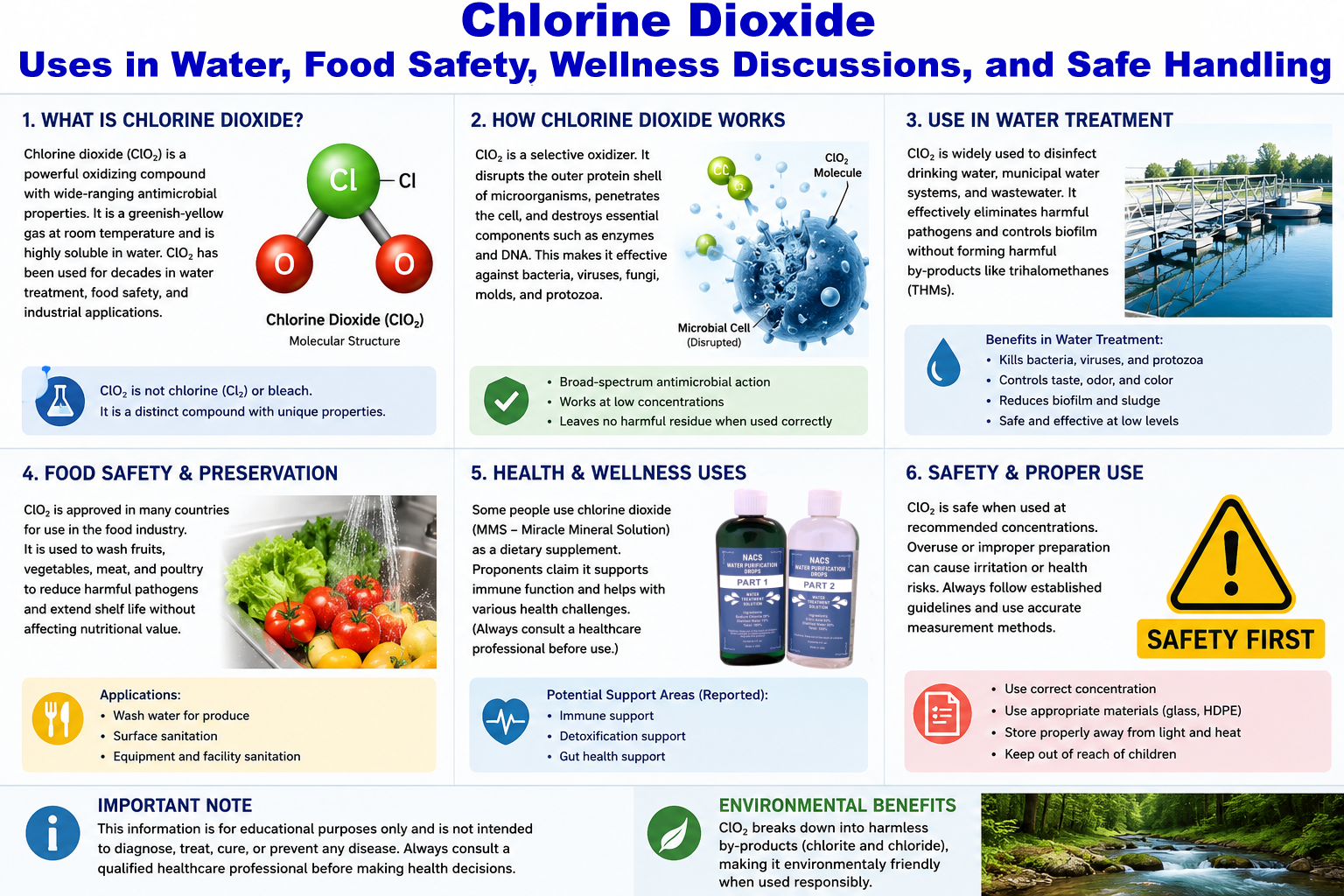
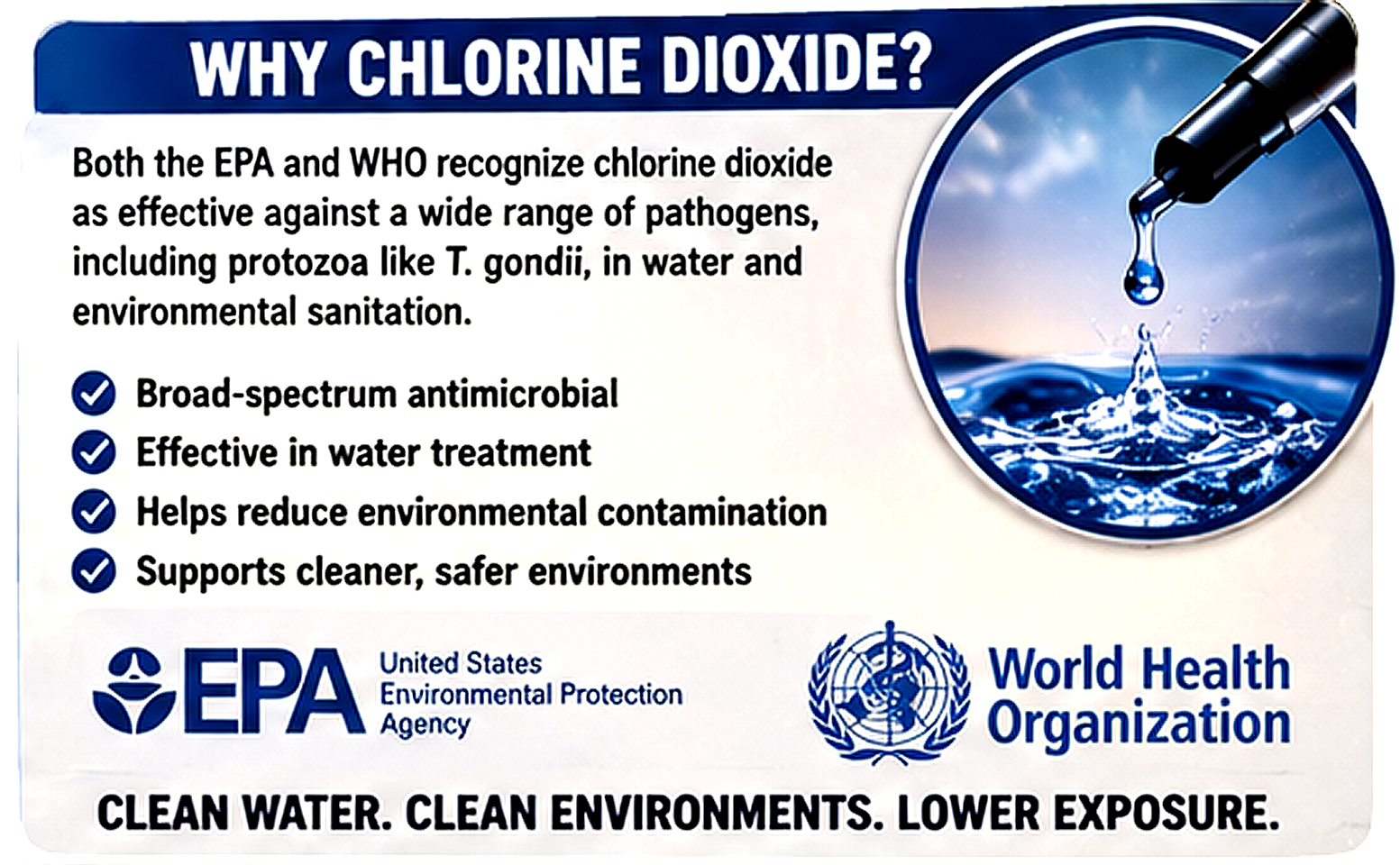
Chlorine dioxide is not an imaginary substance with imaginary properties. It has documented antimicrobial activity. It is used in controlled water-treatment and sanitation applications because it can inactivate certain microorganisms.
Researchers have also investigated its effects on specific organisms under laboratory and environmental conditions. These findings are real and worthy of accurate discussion. They help explain why people became interested in chlorine dioxide in the first place.
But an important scientific distinction remains. A substance that inactivates microorganisms in treated water does not necessarily eliminate infections inside a living human body. The conditions are different. The concentrations are different. The body’s chemistry is different. And an oxidizing agent capable of affecting microorganisms may also damage healthy tissues.
Research into environmental disinfection therefore cannot be used as proof that drinking chlorine dioxide treats cancer, malaria, parasitic infections, or other serious illnesses. That doesn’t mean every question about chlorine dioxide has been answered. It means the evidence must be understood in the setting where it was obtained.
For people facing serious illness, this distinction matters because their time, comfort, and remaining treatment opportunities are valuable.
The Extraordinary Recovery Story
One of the most compelling features of chlorine dioxide literature is the personal recovery account. Someone receives a frightening diagnosis. They are told their prognosis is poor. They begin exploring alternatives, sometimes including chlorine dioxide. Later, they report that their condition improved.
Such stories can be deeply moving. They can also be difficult to interpret.
- Perhaps the person was receiving other treatments.
- Perhaps their diagnosis or prognosis was uncertain.
- Perhaps a spontaneous improvement occurred.
- Perhaps several changes contributed to a better outcome.
- Or perhaps there is something in the experience that deserves further investigation.
Without reliable clinical evidence, we cannot confidently assign the improvement to chlorine dioxide.
But there’s another dimension to these accounts that is sometimes overlooked. The person may have experienced something meaningful even before any measurable physical improvement.
- They stopped feeling helpless.
- They began participating in decisions.
- They found a community.
- They developed a renewed sense of purpose.
- They started looking toward tomorrow instead of only toward the end.
- Those experiences do not prove a medical treatment works.
But they help explain why people remember and share these stories.
When the Desire to Act Becomes More Important Than Certainty
There is a particular kind of urgency that comes with a life-threatening diagnosis. Someone may understand that an unconventional approach could fail.
They may recognize that it could produce an adverse reaction. They may even accept that the outcome is unknowable. But they still want to act. Not because they believe they are guaranteed to recover. Because they are not ready to stop looking. That desire should not automatically be mistaken for ignorance or irrationality.
People make decisions under uncertainty every day. They weigh risks against possibilities. They consider what matters most to them. And sometimes they decide that pursuing another reasonable opportunity is worth the effort.
But there is an important difference between accepting a known risk and assuming that an intervention cannot make things worse because the prognosis is already poor.
A harmful reaction can take away precious time, physical comfort, or the ability to pursue other options. Even near the end of life, those losses matter.
The goal should not be to eliminate a person’s willingness to explore. It should be to help them make decisions without unknowingly sacrificing the very things they’re trying to preserve.
The Importance of Keeping Other Doors Open
Consider someone who receives a six-month prognosis and decides to explore additional approaches.
- They might begin changing their nutrition, seeking complementary support, reading recovery stories, or investigating emerging research.
- They might also preserve the opportunity to reconsider conventional treatments.
- They could seek another specialist’s opinion.
- They could investigate clinical trials.
- They could ask whether surgery, radiation, medications, or symptom-directed treatments might still offer meaningful benefits.
- They could receive palliative care while continuing to explore disease-directed options.
This is not a contradiction. It is a way of refusing to reduce a complicated situation to a single choice.
Exploring possibilities does not have to mean abandoning established care.
And choosing established care does not require surrendering curiosity about complementary approaches.
For someone determined to pursue every meaningful opportunity, keeping doors open may be one of the most valuable decisions they make.
Not Everyone Wants the Same Ending
There is another reality that deserves equal respect. Not everyone who receives a terminal diagnosis wants to pursue every possible intervention.
- Some people have spent years undergoing treatments.
- Some are exhausted.
- Some have reached a place of acceptance.
- Some want their remaining days to be quiet, familiar, and free from additional medical procedures.
They may choose comfort-focused care. They may want to spend their time with family. They may simply want to live whatever life remains without making every day another battle against disease.
That decision is not necessarily surrender. It may be an expression of their deepest priorities. And the person who wants to explore every reasonable option deserves no more compassion than the person who chooses peace.
Both deserve to be heard.
The Conversation We Need to Have About Chlorine Dioxide
Perhaps the chlorine dioxide conversation has become too polarized.
On one side are extraordinary claims, testimonials, and passionate advocates. On the other are regulatory warnings, scientific objections, and concerns about dangerous medical misinformation.
Between those positions are real people.
- People who are frightened.
- People who have already tried treatments that didn’t help.
- People who have read books and listened to stories.
- People who want to understand what chlorine dioxide actually does.
- And people who simply want to know whether there is anything left worth considering.
Those people deserve more than slogans.
- They deserve access to accurate information about the compound’s established properties, its reported uses, the limits of the evidence, and its known risks.
- They deserve to have their experiences heard without being treated as proof of claims that haven’t been established.
- They deserve conversations that acknowledge both uncertainty and urgency.
And above all, they deserve to remain participants in decisions about their own lives.
“I’m Not Ready to Die”
Perhaps this is the statement at the center of the entire discussion. Not a chemical formula. Not a protocol. Not a dispute over a controversial figure.
But a human being saying:
“I’m not ready to die.”
That person may be searching for another treatment. They may be searching for a reason to believe tomorrow is possible. They may be searching for someone who will listen without immediately turning their desperation into a debate.
We don’t have to promise that chlorine dioxide will save them. We don’t have to pretend that every reported recovery establishes a medical breakthrough. And we don’t have to dismiss the experiences that brought people into this conversation.
We can acknowledge the documented science, the unanswered questions, the extraordinary stories, and the genuine risks.We can recognize that the desire to keep fighting is deeply human. And we can remember that when someone is facing the possibility of death, the most compassionate response may begin not with an argument, but with a question:
“What matters most to you right now, and how can we help you pursue it?”
Because hope isn’t the same thing as certainty. And a person doesn’t have to be certain of the outcome to want another chance.
Disclaimer: This article explores the history, reported experiences, and human motivations surrounding chlorine dioxide. It does not establish chlorine dioxide as a safe or effective treatment for cancer, infections, or other diseases. Ingesting chlorine dioxide can cause serious adverse effects. Individuals facing serious illness deserve accurate information, appropriate medical care, and compassionate support in making decisions consistent with their goals.