Chlorine dioxide has become one of the most recognized purification compounds in modern sanitation and water treatment. Although many people first encounter it through camping stores, emergency preparedness kits, municipal water systems, or portable travel treatment products, chlorine dioxide has a much broader history and application profile.
Unlike common household chlorine products, chlorine dioxide behaves differently and has developed a reputation for effective oxidation and disinfection across multiple industries. From treating drinking water to supporting food sanitation systems, chlorine dioxide continues to attract interest among travelers, outdoor enthusiasts, emergency planners, and those exploring wellness-related discussions.
This article explores what chlorine dioxide is, how it works, where it is commonly used, and important considerations for safe handling.
- What Is Chlorine Dioxide?
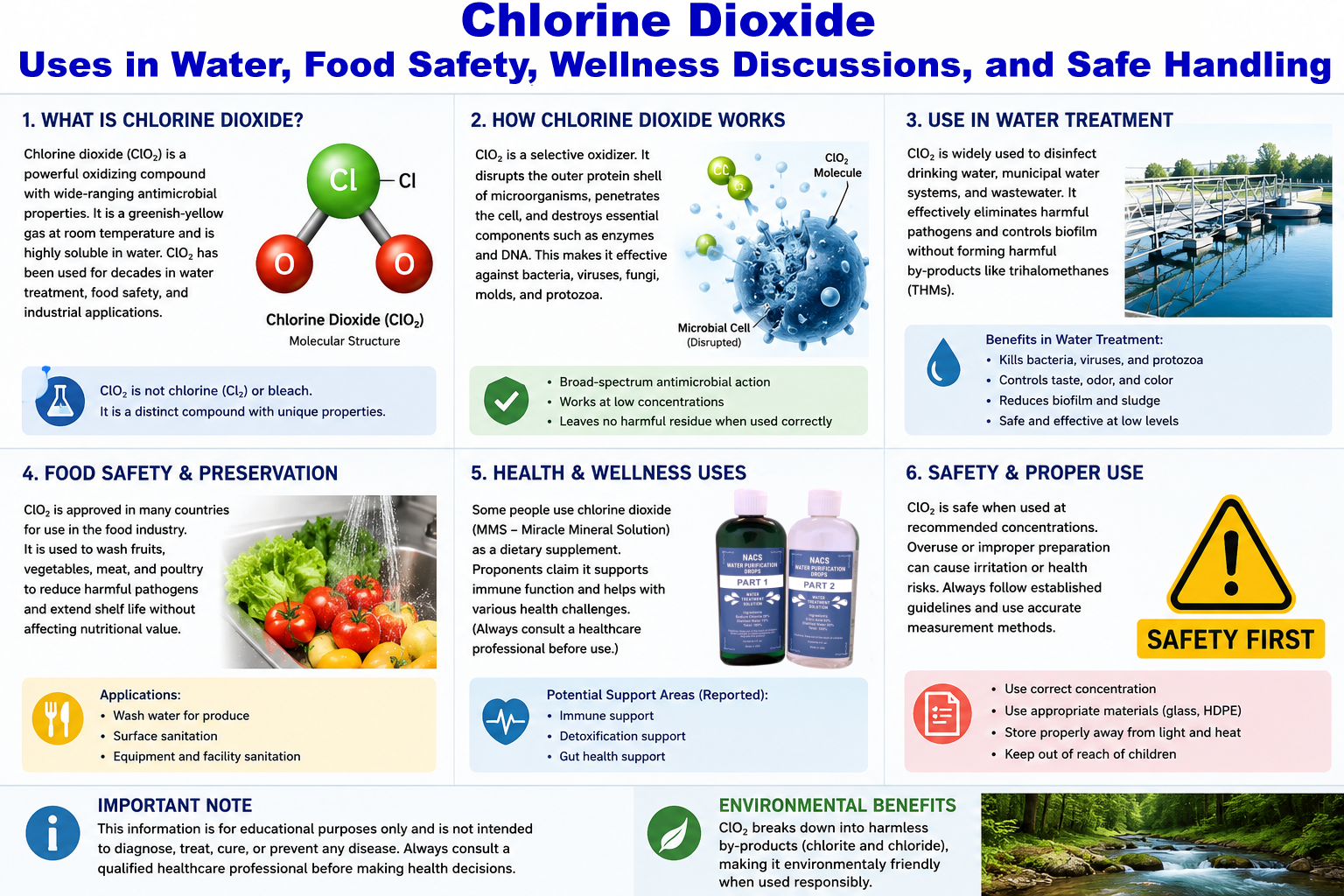
Chlorine dioxide (ClO₂) is a yellowish gas that dissolves readily in water and acts as a selective oxidizing agent. It has been used for decades in municipal water treatment, industrial sanitation, food processing, and environmental applications.
Unlike chlorine bleach (sodium hypochlorite), chlorine dioxide works differently chemically and does not chlorinate materials in the same way. Instead, it primarily functions through oxidation.
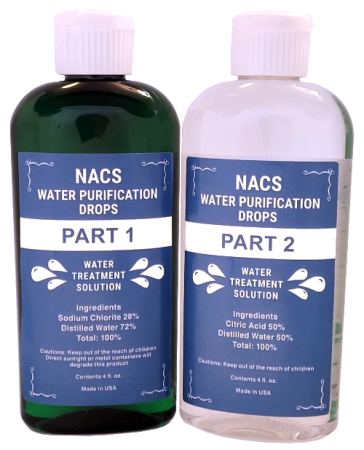
Because chlorine dioxide gas is unstable for long-term storage, many portable products use a two-part activation system that generates chlorine dioxide immediately before use.
These systems are especially popular as:
-
- Water purification drops
- Emergency water treatment kits
- Camping and hiking purification solutions
- International travel preparedness products
- Remote work and field-use sanitation systems
Their portability makes them useful where reliable treated water may not be available.
- How Chlorine Dioxide Works
Chlorine dioxide works through oxidation.
When activated in water, chlorine dioxide interacts with certain microorganisms by disrupting critical biological structures and reducing their ability to remain viable.
This mechanism has made chlorine dioxide useful in applications intended to reduce contamination from:
-
- Certain bacteria
- Some viruses
- Protozoa
- Biofilm formation
- Organic contaminants that affect taste and odor
One characteristic often highlighted is that chlorine dioxide remains effective across a broader pH range than some traditional chlorine systems.
Because of this property, chlorine dioxide is frequently selected for challenging environments where water quality varies.
- Use in Water Treatment
Water treatment remains one of chlorine dioxide’s most established uses.
Municipal systems, industrial facilities, emergency response teams, and outdoor users employ chlorine dioxide technologies to improve water quality and reduce microbial contamination.
Municipal Water Treatment
Large-scale systems may use chlorine dioxide to:
-
- Improve drinking water quality
- Reduce odors and unpleasant tastes
- Help manage microbial contamination
- Control certain water-related compounds
Outdoor Recreation and Adventure
Campers, hikers, hunters, and backpackers commonly carry chlorine dioxide water treatment drops because they are lightweight and do not require electricity.
Example situations:
Camping
-
- Drawing water from a mountain stream
- Treating lake water at a campsite
- Preparing safe cooking water
Hiking & Backpacking
-
- Refilling bottles along trails
- Emergency water access
- Multi-day backcountry trips
Hunting & Remote Outdoor Use
-
- Extended time away from infrastructure
- Field camps
- Survival preparedness
International Travel
Travelers sometimes carry portable water treatment products while visiting unfamiliar regions.
Example situations:
-
- Questionable tap water quality
- Rural accommodations
- International backpacking
- Extended overseas stays
Some travelers prefer portable purification as an additional layer of water confidence when traveling abroad.
- Food Safety & Preservation
Another common application of chlorine dioxide is food sanitation.
Food processing environments may use chlorine dioxide systems to reduce contamination on equipment, water lines, and certain produce handling processes.
Examples include:
-
- Washing fruits and vegetables
- Processing equipment sanitation
- Food preparation surfaces
- Agricultural water systems
Food preservation efforts often focus on reducing microbial load while helping maintain appearance and freshness.
The goal is not to sterilize food completely but to support cleaner handling conditions.
- Health & Wellness Uses
Chlorine dioxide has generated significant discussion in wellness communities, particularly around ideas of cleanliness, environmental exposure reduction, and personal responsibility during travel and preparedness situations.
Some people associate chlorine dioxide products with:
-
- Emergency preparedness
- Travel hygiene planning
- Water confidence while outdoors
- General environmental sanitation practices
However, health-related claims beyond approved and established uses remain controversial and may not be supported by regulatory authorities.
For personal health concerns, people should rely on qualified healthcare guidance and established treatment recommendations.
Many individuals who discuss chlorine dioxide in wellness settings focus primarily on water quality awareness, environmental hygiene, and preparedness rather than medical treatment.
- Safety & Proper Use
As with any purification product, safe handling matters.
Key guidelines include:
Follow Product Directions
Use only according to the manufacturer’s instructions regarding activation, contact time, and intended purpose.
Respect Concentration Levels
More is not necessarily better. Proper concentration and exposure time matter.
Store Correctly
-
- Keep containers sealed
- Protect from excessive heat and light
- Store away from children
Use Appropriate Containers
Glass and compatible plastics are commonly recommended for handling activated solutions.
Understand Intended Purpose
Water treatment products are designed for water purification and sanitation purposes according to their instructions.

Chlorine dioxide occupies an unusual space where industrial sanitation, municipal treatment, outdoor preparedness, food safety, and travel convenience overlap.
For many people, its appeal is simple: lightweight access to cleaner water when conditions are uncertain.
Whether packed in a backpack, stored in an emergency kit, carried internationally, or used in large-scale infrastructure, chlorine dioxide remains one of the more widely recognized purification technologies in modern water treatment and sanitation.