Few organisms have captured public imagination quite like Toxoplasma gondii. Part parasite. Part behavioral mystery. Part environmental survivor. And somehow, despite being microscopic, it has generated discussions involving cats, personality changes, cravings, mental health, risk-taking, food safety, water quality, and even long-term wellness.
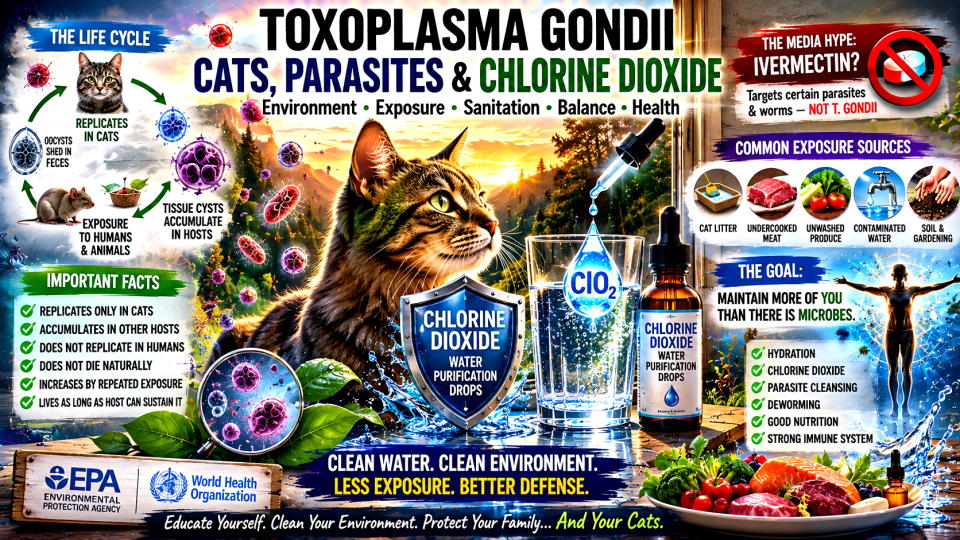
If you spend enough time reading about T. gondii, one thing becomes clear: People are not merely interested in avoiding infection. Many are asking a bigger question: Could reducing environmental exposure to T. gondii change more than we realize? And that is often where chlorine dioxide enters the conversation.
What Is Toxoplasma gondii?
Toxoplasma gondii is a protozoan parasite found throughout much of the world. Cats and other members of the cat family play a unique role in their life cycle because they are the definitive hosts. That is to say, the only animals in which T. gondii completes sexual reproduction and sheds environmentally resistant oocysts.
That biological detail is important because it often gets simplified into: “Cats spread it, and everybody else grows it.” Ironically, many people exposed to T. gondii may never own a cat.
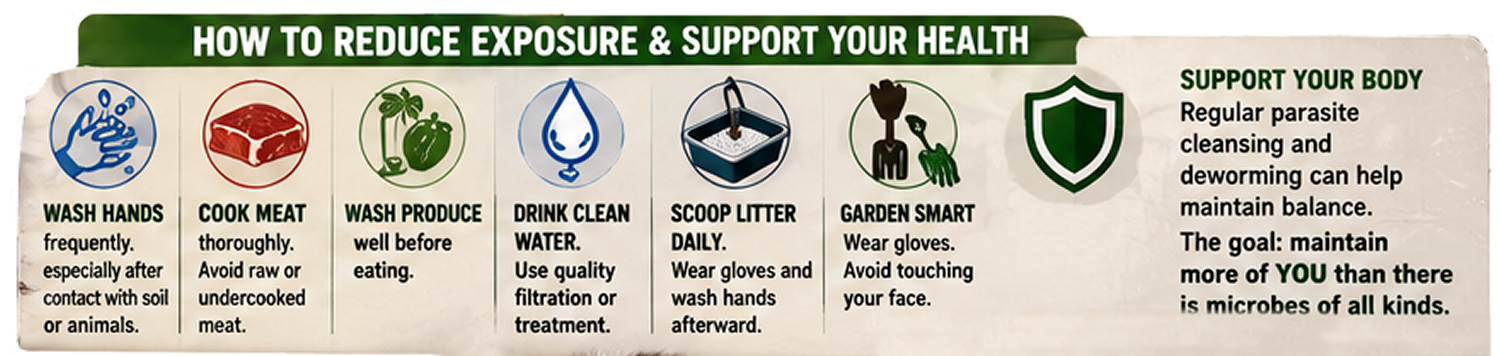
Human exposure is commonly associated with:
- undercooked meat
- contaminated water
- soil exposure
- unwashed produce
- gardening
- environmental contamination
- food handling
- animal exposure
- and sometimes cat litter exposure
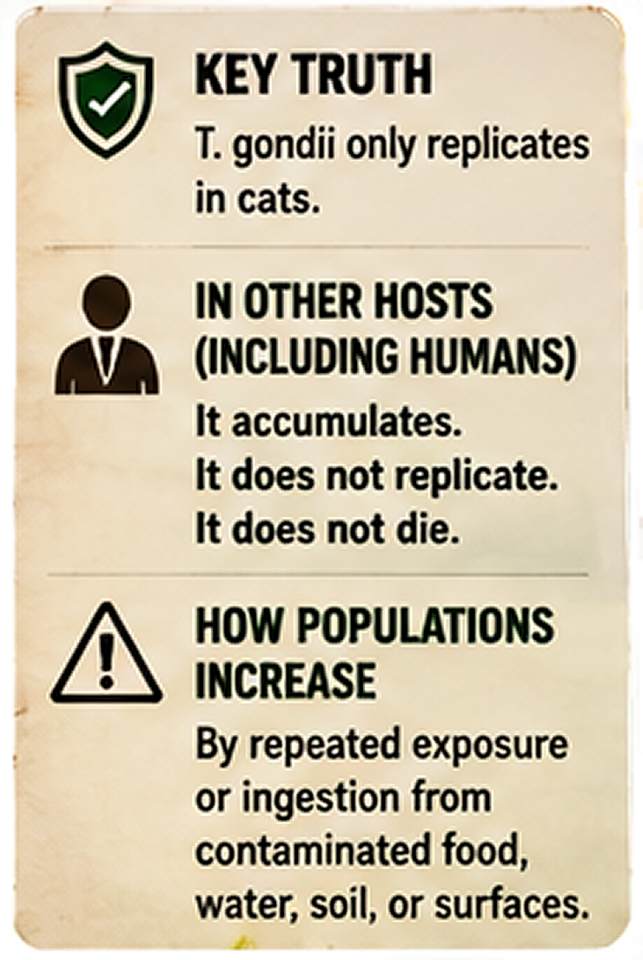
In people and most other warm-blooded animals, T. gondii does not reproduce through the same sexual cycle seen in cats. Instead, after exposure, the organism may form tissue cysts that persist within the host for its lifetime.
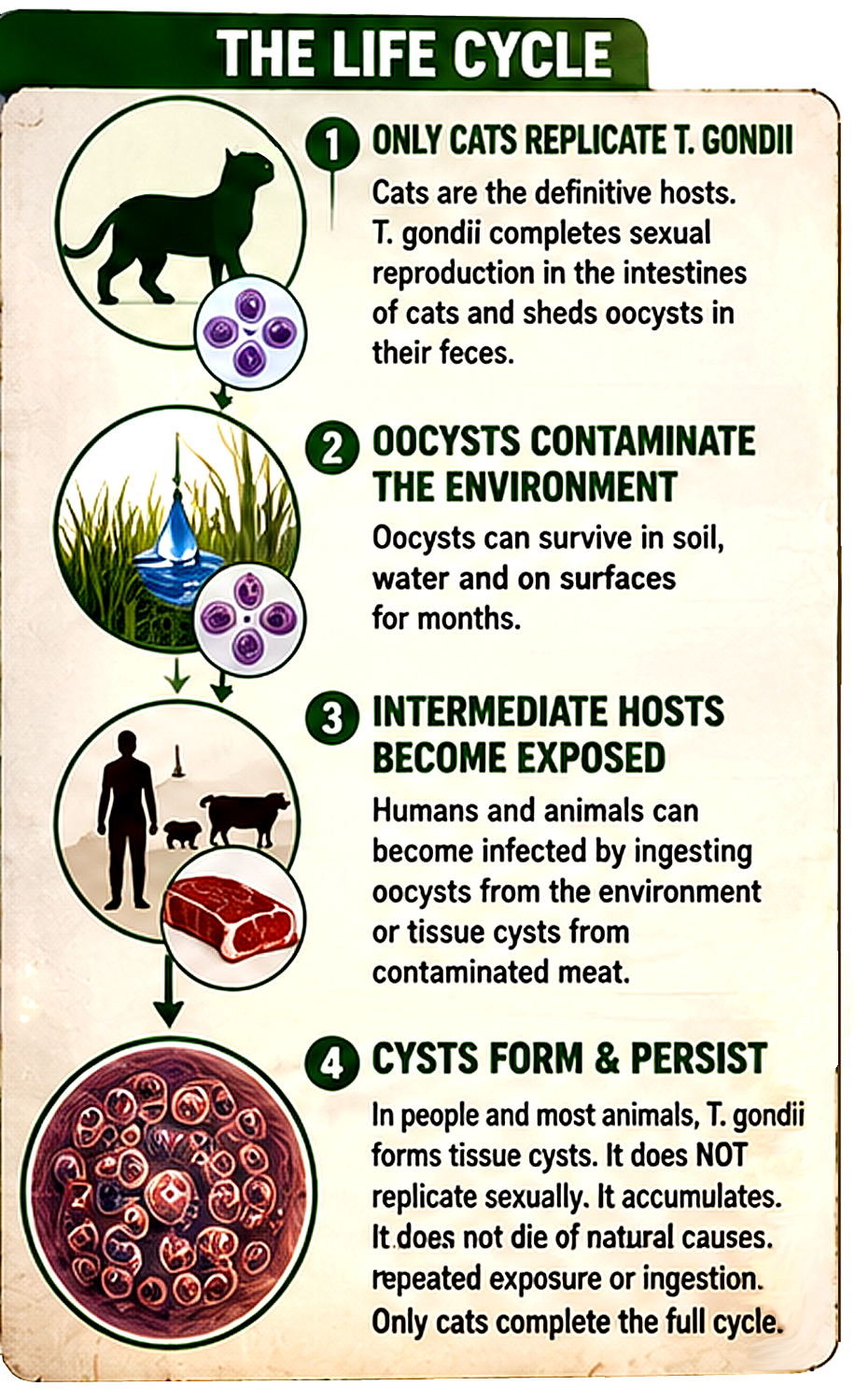
This persistence is one reason people become fascinated by T. gondii, as it becomes part of the host’s long-term biological environment. However, the organism does not multiply inside people. Their numbers increase with further exposure over time.
This distinction matters because people sometimes imagine T. gondii as endlessly multiplying inside humans for life, which is not how current understanding generally describes it.
People become interested in lowering environmental exposure where practical. Their philosophy is often simple: Support the health of the host and reduce unnecessary biological burden.
In alternative wellness communities, that broader philosophy sometimes includes discussion of:
- parasite-awareness practices
- food hygiene
- water quality
- digestive support
- environmental sanitation
- periodic wellness routines
Supporters sometimes summarize the idea informally as:
“Maintain more of the healthy you than environmental burden.”
While the language is not scientific, the underlying principle reflects a desire to support resilience rather than assume complete control over every environmental exposure.
Like most things in biology, the goal is usually not sterility. It is balance.
Why People Become Fascinated by T. gondii
Part of the fascination comes from behavior.
Researchers have investigated whether T. gondii exposure may correlate with differences in:
- reaction time
- risk-taking
- impulsivity
- anxiety
- mood patterns
- and reward sensitivity
Those findings remain an active area of study and interpretation. Some scientists view effects as subtle. Others question how meaningful they are. In Europe, T. gondii is thought to be associated with cat lady syndrome. But the possibility that a microscopic organism could influence host behavior captured public attention.
The Question People Start Asking
Once people learn that T. gondii moves through:
- water
- food
- soil
- animals
- environmental systems
they often ask: If environmental exposure matters… could environmental sanitation matter too? That is where chlorine dioxide comes in.
Where Chlorine Dioxide Is Established
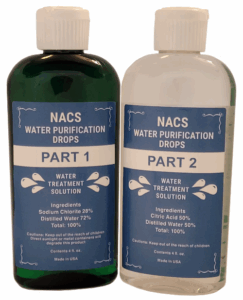
Chlorine dioxide has a long history in killing specific protozoan parasites, such as:
- Toxoplasma gondii
- Giardia lamblia (Giardia)
- Cryptosporidium parvum (Cryptosporidium)
- Free‑living amoebae (FLA)
- Naegleria fowleri (the “brain‑eating amoeba”)
- Acanthamoeba spp.
It became popular because of broad antimicrobial activity in controlled sanitation settings.
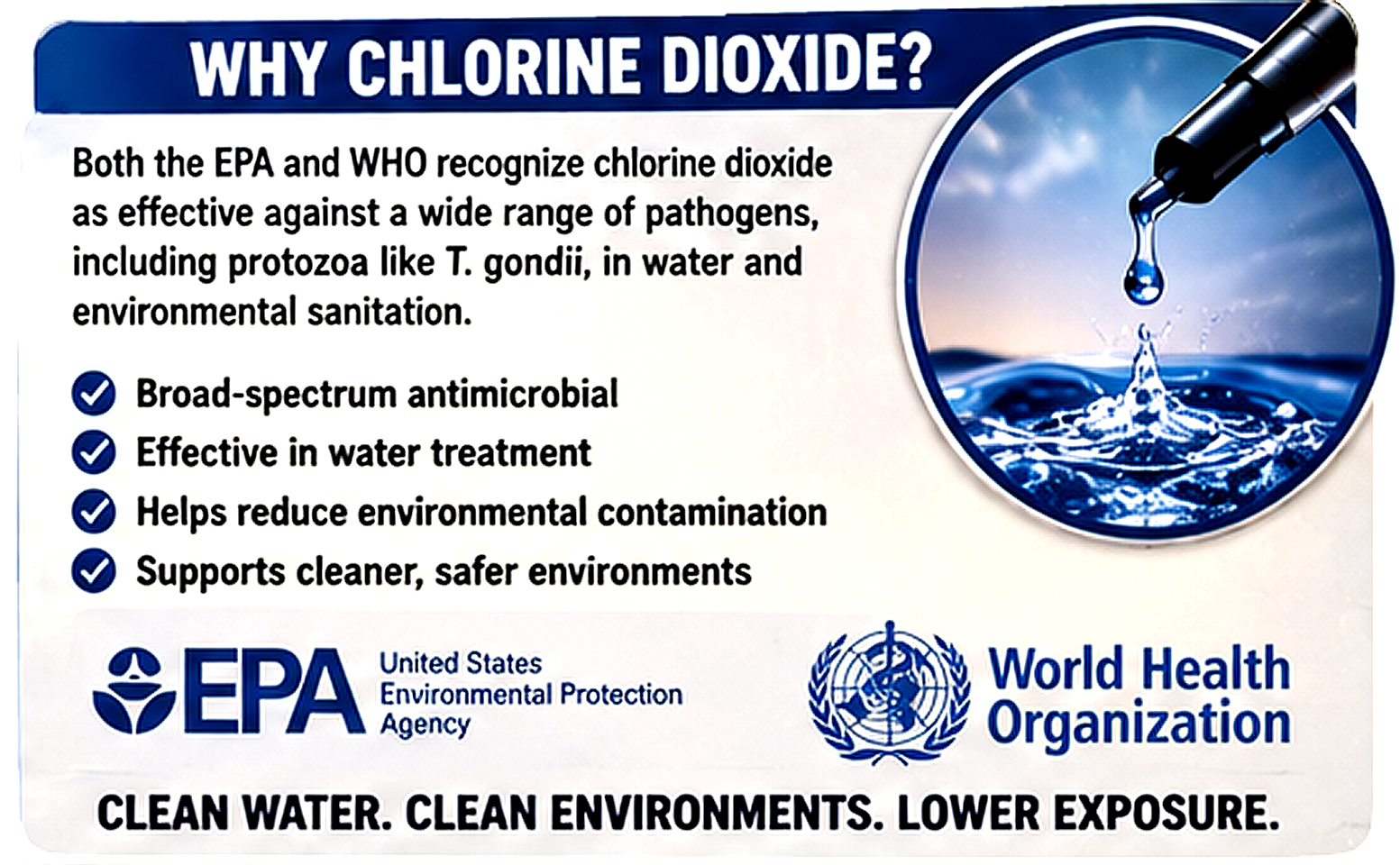
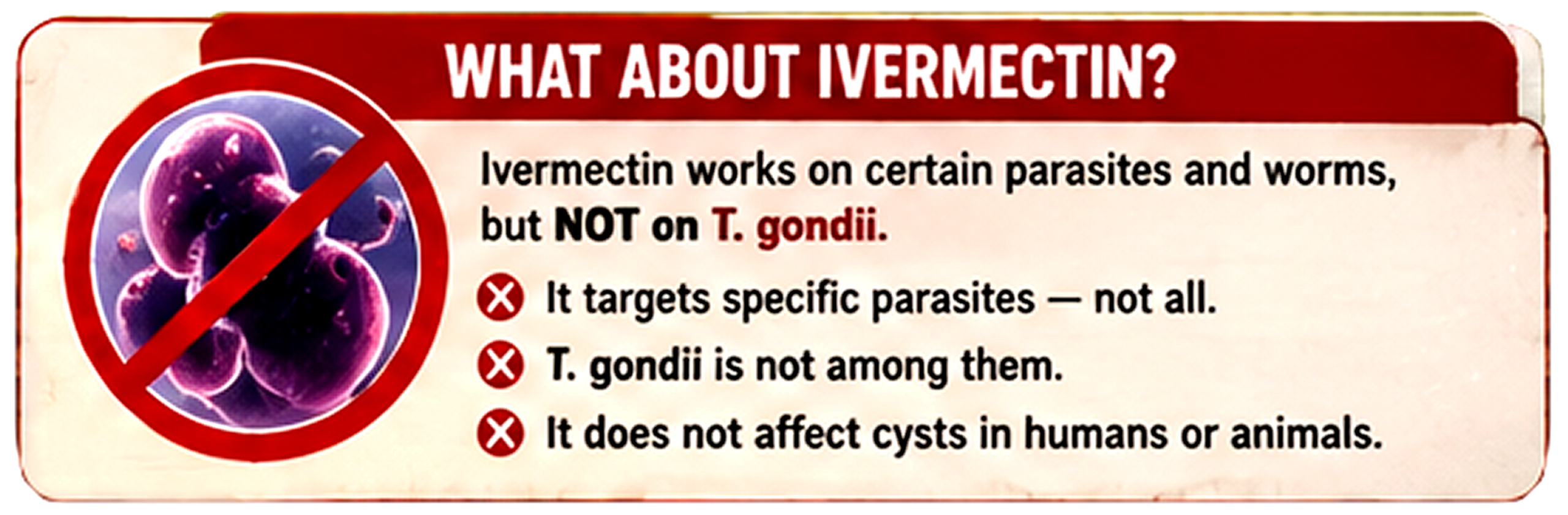
Though many proponents of chlorine dioxide imbue the substance with far more credit than it currently deserves, chlorine dioxide is proven to kill several (not all) waterborne protozoan parasites (including some of the hardest‑to‑kill cysts). Note that chlorine dioxide is not known to kill helminths (worms). Ivermectin does kill worms, but it does not kill T. gondii or tapeworms.
Why Some People Mention Cat Worms
People who care deeply about cats often refer to T. gondii as cat worms, even though they cannot be seen by the naked eye as they are microscopic in size, and the pet owners become interested in environmental hygiene because they want to:
- maintain cleaner litter environments
- reduce environmental contamination
- improve sanitation practices
- manage food and water quality
This is generally where most preventive practices live. Not much attention is given to elimination, detox, or lowering opportunities for transmission.
Cat Worms
To clear up the confusion, if you see worms coming out of your cat, these are not T. gondii, as they are microscopic, and neither they nor their eggs can be seen with the naked eye. If you are seeing white rice-sized material (sesame seeds or little wriggling pieces), these are sections of a larger tapeworm and are not associated with T. Gondii. If you are seeing long spaghetti‑like worms, 2–5 inches long, sometimes vomited up, these are roundworms (Ascarids), commonly Toxocara cati or Toxascaris leonina, most prevalent among kittens, also not associated with T. gondii.
Cat Worm Confusion
People often refer to all of these colloquially as “cat worms” and confuse these worms with Toxoplasma gondii, which cannot be seen. Reasons for the confusion may be due to the name “Toxoplasma” sounding like “Toxocara,” i.e., Toxoplasma gondii is a protozoan (microscopic), and Toxocara cati is a roundworm (visible). Cat owners hear “cats shed Toxoplasma” and assume it’s visible, but T. gondii is microscopic and looks like nothing in the litter box. Toxoplasma gondii is not a worm; it is a protozoan, but is often referred to as “cat worms.” Dewormers do not kill T. gondii, but chlorine dioxide does.

Why This Topic Becomes Emotional
Toxoplasma discussions often become emotional because they touch several uncomfortable ideas:
- invisible organisms
- chronic exposure
- behavior
- household pets
- environmental contamination
People love cats. People fear parasites. And those emotions can collide. But one important reminder often gets lost: Cats are not the enemy. They are simply part of a much larger ecological system.
Perhaps the most useful takeaway from the entire discussion of chlorine dioxide and T. gondii is not about killing organisms. It is about understanding environments.
- Healthy water.
- Thoughtful food preparation.
- Clean habits.
- Respect for biological systems.
Those practices remain far more established than any dramatic claims.
The conversation around Toxoplasma gondii continues because it raises fascinating questions:
- How much does environment shape health?
- How much do unseen organisms matter?
- How much do sanitation and exposure influence long-term outcomes?
Those questions deserve research. And curiosity.
But curiosity becomes most useful when we clearly separate:
- environmental control
- exposure reduction
- sanitation practices
- biological theory
- and therapeutic claims
That distinction protects both imagination and good science.
Disclaimer
This article is for educational purposes only. Chlorine dioxide is widely used in controlled water treatment and sanitation applications. References to Toxoplasma gondii relate to environmental exposure and sanitation concepts and should not be interpreted as treatment claims for people or animals. Anyone concerned about toxoplasmosis or pet health should consult qualified veterinary or medical professionals.